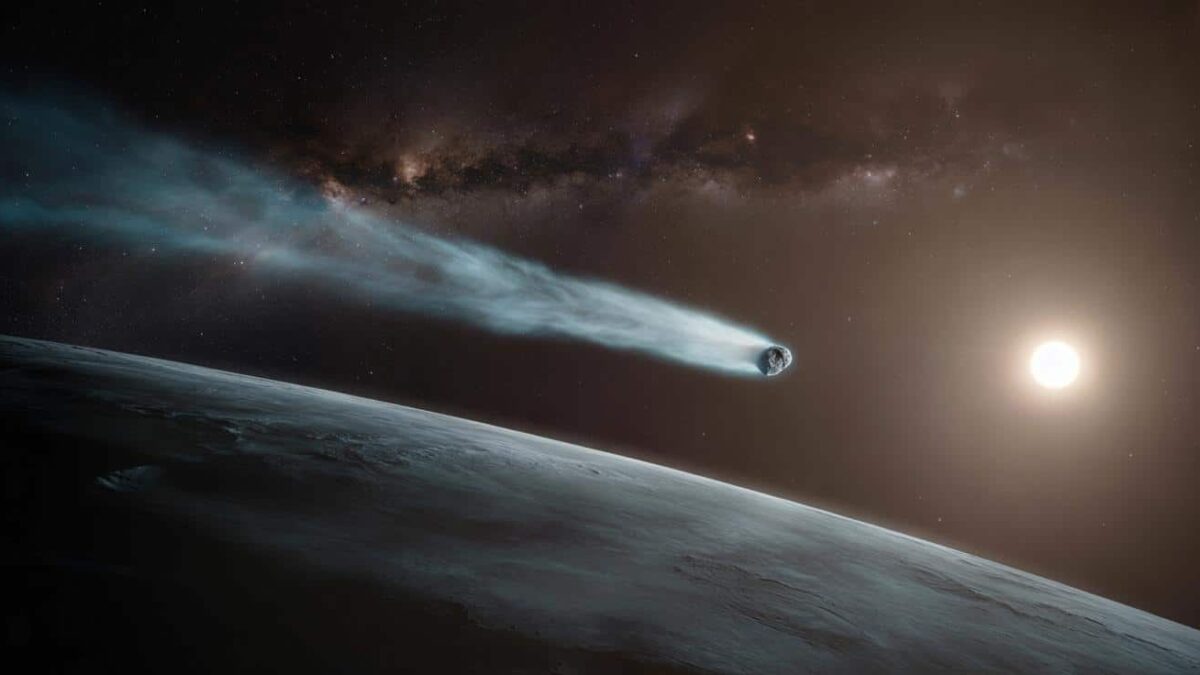
Imagine a chilly March evening where astronomers’ screens capture a subtle streak of light gliding through the darkness. At first glance, it appears as just another comet, an icy wanderer from the solar system’s remote edges. But as orbital data poured in, the excitement turned to astonishment—the path was straight and unbound, signaling an outsider slicing through our cosmic domain without plans to return.
This discovery, dubbed Comet 3I Atlas, marks only the third verified interstellar object to grace our solar system. It prompts a profound question: how many more unseen travelers are quietly traversing our stellar neighborhood right now?
The Unusual Path of Comet 3I Atlas: A True Interstellar Visitor
Comet 3I Atlas stands out due to its highly hyperbolic orbit, with an eccentricity exceeding 1. This mathematical hallmark confirms it originates from beyond our solar system, embarking on a one-way journey through the Sun’s influence before vanishing into interstellar space.
Unlike typical comets that follow elongated, closed loops around the Sun, this object defies such patterns. It serves as a stark reminder that our sky, despite extensive mapping efforts, harbors far more mysteries than we’ve cataloged.
The detection began with the ATLAS survey telescope in Hawaii, originally built to spot potential Earth-impacting asteroids. In early 2024, it flagged Comet 3I Atlas as a routine candidate. Orbital experts soon noted the anomaly, transforming initial indifference into scientific fervor.
Comparing to Past Interstellar Guests
Prior visitors like ‘Oumuamua in 2017 and Comet Borisov (2I) set precedents. ‘Oumuamua puzzled with its cigar-like shape and unexpected acceleration, while Borisov resembled a conventional comet. Comet 3I Atlas reopens debates, underscoring that interstellar objects arrive unpredictably from diverse galactic origins.
- High speeds: They hurtle in faster than solar-bound bodies.
- Unpredictable directions: No adherence to familiar orbital families.
- Unknown origins: Ejected from distant star systems eons ago.
Astronomers crave order—predictable comet groups and asteroid belts. Yet these intruders disrupt that comfort, portraying our solar system as an open thoroughfare rather than a fortified enclave.
Observing and Tracking the Elusive Comet 3I Atlas
Spotting Comet 3I Atlas isn’t a spectacle for casual skywatchers. It’s faint, demanding professional-grade telescopes for clear imaging. Observers capture sequential photos to plot its relentless motion across the night sky.
Amateur enthusiasts might glimpse it under ideal conditions—dark skies, precise tracking—but most data flows from observatories. This methodical process reveals subtle shifts, confirming its interstellar status.
A key insight emerges from archival reviews: traces of such objects often lurk in past images, overlooked until hindsight. This highlights systemic blind spots in our monitoring.
Challenges in Detecting Fast-Moving Space Intruders
Our tools, though advanced, fall short. Small, dim objects evade notice, especially near the Sun’s glare or during daylight scans. Surveys like ATLAS cover swaths but leave gaps, scanning methodically rather than comprehensively.
- Limited sky coverage: No telescope watches everywhere simultaneously.
- Faint reflections: Dark surfaces bounce minimal light back to us.
- Short warning windows: Rapid transits offer mere weeks for analysis.
Planetary scientists express unease, viewing each find as merely the visible peak of a vast, undetected flotilla. For every spotted interloper, multitudes likely pass undetected, reshaping our perception of local space traffic.
Implications of Interstellar Objects for Solar System Security
Comet 3I Atlas doesn’t just intrigue; it exposes vulnerabilities. If our system ejects debris into the galaxy, reciprocally, fragments from alien worlds routinely invade ours. This bidirectional exchange paints a dynamic, interconnected cosmos.
Historical context amplifies concerns: pre-2017, no confirmed interstellar objects existed despite decades of observation. Enhanced sensitivity now reveals a busier reality, suggesting past misses were routine.
Future upgrades, like the Vera C. Rubin Observatory, promise denser sky sweeps. These will net more visitors, refining estimates of interstellar flux and compositions via spectroscopy.
The Speculative Edge: Natural or Something More?
Most data pegs Comet 3I Atlas as a natural icy body. Yet ‘Oumuamua’s quirks linger in discussions, with natural explanations like exotic outgassing prevailing. A fringe ponders artificial origins, though evidence remains absent.
- Composition sampling: Rare for all but brightest objects.
- Risk assessment: Most paths avoid Earth, but vigilance persists.
- Technological evolution: Better tools will demystify the influx.
This comet grounds speculation in fact: interstellar visitors are commonplace, urging expanded surveillance.
Broader Galactic Perspectives and Future Discoveries
Ultimately, Comet 3I Atlas reframes humanity’s cosmic address. Our solar system morphs from isolated haven to bustling interstellar junction, teeming with ejected relics from myriad stars.
As detection improves, expect a surge in findings—brighter trails, closer passes, stranger forms. Some may affirm theories; others challenge physics, unveiling galactic narratives etched in ice and rock.
Though Comet 3I Atlas fades into obscurity, its legacy endures. It compels us to widen our gaze, acknowledging that the starry void brims with transients. Enhanced monitoring will illuminate this hidden realm, blending awe with prudent awareness for whatever crosses our path next.
In conclusion, this interstellar comet doesn’t just pass by—it provokes a reevaluation of vigilance. By bolstering surveys and analysis, we edge closer to a fuller cosmic ledger, ready for the galaxy’s uninvited guests.
What makes Comet 3I Atlas an interstellar object?
Can backyard telescopes spot Comet 3I Atlas?
Is Comet 3I Atlas a threat to Earth?
Could interstellar objects be artificial?
Why more interstellar objects now?
