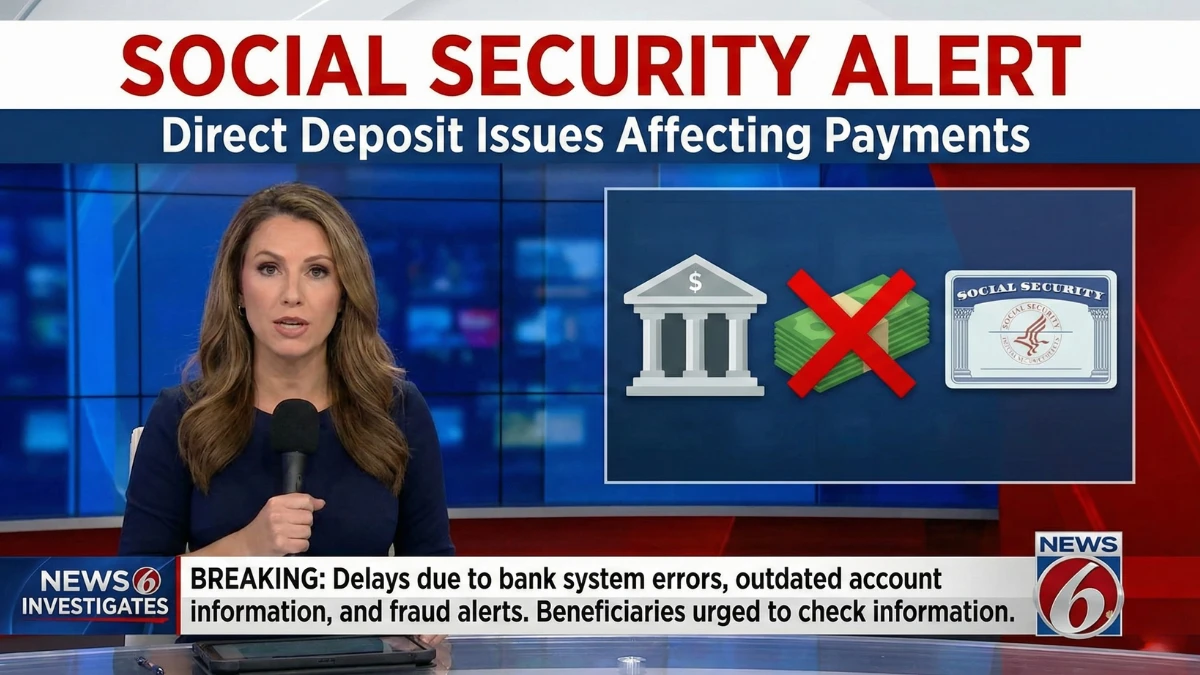
Imagine logging into your bank account on your expected Social Security payment day, only to find it empty. While direct deposit offers a reliable way to receive SSA benefits, common banking hiccups can cause frustrating delays. This guide dives deep into the causes of these direct deposit issues, explains the payment process, and provides actionable steps to safeguard your funds and keep payments flowing smoothly.
Understanding the Social Security Direct Deposit Schedule
The Social Security Administration (SSA) follows a predictable schedule based on your birth date. Payments for those born between the 1st and 10th arrive on the second Wednesday of the month, while birthdays from the 11th to 20th trigger deposits on the third Wednesday.
Individuals with birthdays between the 21st and 31st get theirs on the fourth Wednesday. This system ensures efficiency, with the SSA sending funds days in advance via secure federal networks to your bank’s system.
Since phasing out paper checks in 2013, direct deposit has become the norm for almost all recipients. Funds usually appear by early morning, but any break in the transfer chain can lead to postponements.
Key Steps in the Payment Journey
From SSA initiation to bank crediting, multiple stages exist where delays can occur. Banks manage the final posting, making them the primary source of most disruptions.
Access your personalized schedule through the “my Social Security” online account. This helps you differentiate standard processing from actual direct deposit issues.
Common Causes of Direct Deposit Disruptions
Banking errors are the leading culprits behind missing Social Security payments. These often involve simple administrative mistakes unrelated to your benefit amount.
Incorrect routing or account numbers cause instant rejections, sending funds back to the SSA. Similarly, closed or dormant accounts block deposits entirely.
| Issue | Impact on Payment |
|---|---|
| Incorrect account or routing number | Rejected and returned to SSA |
| Closed or inactive account | Deposit fails outright |
| Bank name or ownership mismatch | Hold for manual review |
| Recent account updates | One-month processing delay |
Review your SSA records against bank statements monthly to catch mismatches early and prevent headaches.
Handling Bank Name and Ownership Discrepancies
Even small typos in bank names or mismatched ownership details—like overlooking joint account holders—can pause your deposit. Banks enforce strict anti-fraud measures, which unfortunately prolong verification.
Joint accounts pose frequent challenges; ensure every name matches exactly between SSA records and bank info. Double-check all details proactively to sidestep these hurdles.
Aligning your SSA profile with current banking documents is crucial. This simple habit keeps transactions moving without interruption.
Managing Bank Account Changes Effectively
Switching banks is common, but timing matters greatly. Updates submitted near payment dates may not process in time, causing a one-month delay.
Use the “my Social Security” portal or dial 1-800-772-1213 for changes. Plan ahead by submitting at least 30 days before your next deposit.
- Confirm routing and account numbers meticulously before submission.
- Track confirmation via email or SSA dashboard.
- Steer clear of changes during high-volume periods like month-end.
These practices minimize direct deposit problems SSA encounters, ensuring uninterrupted benefit flow.
Pro Tips for Smooth Transitions
Base updates on your latest bank statement for pinpoint accuracy. Monitor subsequent payments closely and leverage SSA’s messaging for swift resolutions.
This vigilant approach resolves issues fast and avoids future disruptions, securing your financial rhythm.
Resolving Rejected Deposits Promptly
Rejected payments bounce back to the SSA automatically, typically reprocessing in 7-10 business days. Importantly, your full benefit amount remains intact—no cuts occur.
Contact your bank first to identify the rejection cause or any holds. Correct the issue, then alert the SSA to expedite reissuance.
The SSA’s online tracker provides live updates on returned funds. Document all interactions to facilitate quicker follow-ups.
Speeding Up Reissuance
Enable bank alerts for SSA payments to spot arrivals instantly. For stubborn cases, send verified details via certified mail.
A quick bank call fixes over 90% of problems same-day, slashing wait times dramatically.
Bank Processing Differences and Delays
Banks vary in direct deposit availability policies—some offer instant access, others next-day posting. Weekends, holidays, or peak times exacerbate this; a Friday deposit might wait until Monday.
Major banks with advanced tech often outperform smaller ones. Consult your account agreement for Social Security direct deposit specifics.
Factors Influencing Posting Speed
Volume spikes overwhelm systems during busy seasons. If delays recur, opt for banks renowned for fast SSA benefits handling.
- Monitor pending transactions daily via mobile app.
- Keep a cash reserve for timing variances.
- Switch providers if chronic issues persist.
Dealing with Fraud Checks and Holds
Banks rigorously vet large deposits like SSA benefits. Discrepancies or new accounts trigger 24-72 hour holds for security.
These are bank-specific protocols, not SSA-related. Pre-notify your bank of incoming payments to accelerate release.
Recent changes, such as adding joint owners, invite extra scrutiny. Supply ID promptly to unlock funds often same-day.
Key Insights for SSA Recipients
- 95% of delays arise from bank errors, not SSA.
- Account changes delay only one cycle typically.
- Reissued payments deliver full benefits.
- Banks control posting—SSA can’t override.
- Eligibility remains unaffected.
- Bank outreach resolves most issues hourly.
Troubleshoot starting with your bank’s app or hotline. Escalate to SSA with records if necessary, and audit direct deposit details routinely.
These steps build a reliable system for monthly payments without fail.
Conclusion: Secure Your Social Security Pipeline
Direct deposit issues may shift timing but never reduce your Social Security payments. By grasping the SSA-to-bank pathway, you empower yourself to foresee and fix rejections, holds, and lags.
Prioritize prompt updates, constant oversight, and proactive communication. These strategies guarantee timely funds, fortifying your financial stability now and in the future. Take charge today for the dependable benefits you deserve.
Why is my Social Security direct deposit delayed?
Does a direct deposit issue reduce my benefits?
How long do bank holds last on SSA payments?
What should I do if my SSA payment is returned?
Will switching banks delay my payment?
