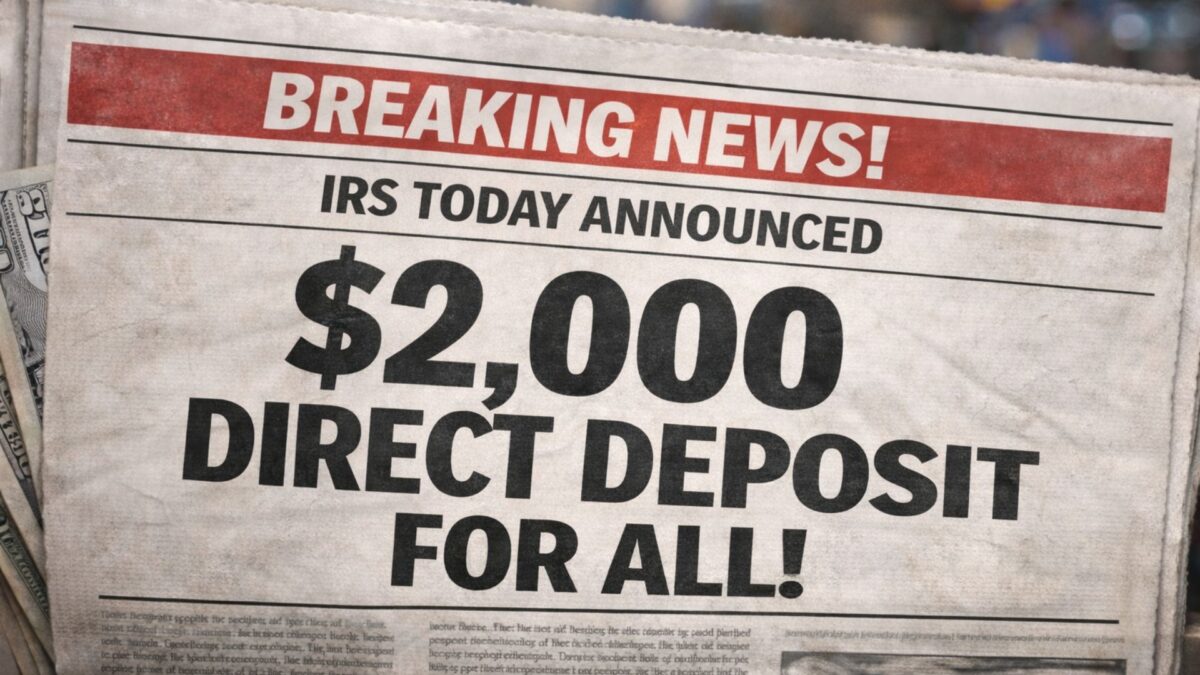
As January 2026 approaches, countless Americans face mounting pressures from rising costs in housing, groceries, utilities, and post-holiday spending. The Internal Revenue Service (IRS) steps in with a timely solution: a $2,000 direct deposit program designed to provide immediate relief to low- and middle-income households. This one-time payment pulls from your existing tax data, requiring no applications or repayments, making it a hassle-free boost to your finances.
Ideal for tackling winter expenses or rebuilding savings, this initiative promises quick delivery through electronic transfers or checks. Understanding the program’s core elements—from eligibility to timelines—can help you maximize its benefits and navigate the new year with greater confidence.
Key Highlights of the IRS $2,000 Direct Deposit Initiative
The $2,000 IRS direct deposit stands apart from standard tax refunds or past stimulus efforts. It draws directly from your 2024 or 2025 federal tax returns, targeting those hit hardest by ongoing inflation and economic challenges.
Funds arrive swiftly, either via direct deposit for speed or paper checks for others, ensuring broad accessibility. This approach minimizes paperwork while focusing on verified IRS records to deliver aid where it’s needed most.
What sets this program apart is its simplicity and impact. Recipients can use the money for essentials like energy bills, food, or debt, providing a real lifeline during tough times.
Unique Benefits and Features
This payment is fully automated for most, eliminating the need for extra steps. It won’t impact your future taxes or benefits, keeping your financial profile intact.
- One-time lump sum: Perfect for strategic budgeting and long-term stability.
- No repayment required: Pure support with zero obligations.
- Seamless automation: Based on your IRS profile for error-free distribution.
- Wide reach: Prioritizes efficiency to help millions quickly.
By relying on established tax data, the IRS reduces fraud risks and speeds up the process, benefiting families nationwide.
Eligibility Requirements for the January 2026 Payment
Qualifying for the IRS $2,000 payment hinges on your adjusted gross income (AGI) from recent filings, with thresholds adjusted for singles, married filers, and heads of household. Low- to middle-income earners form the core group, ensuring aid goes to those facing the greatest strains.
You must have submitted a 2024 tax return or used the IRS Non-Filer portal. U.S. residency for at least six months in 2025, plus a valid Social Security number (SSN) or ITIN, are non-negotiable basics.
Household dynamics play a key role too. Claiming dependents can enhance your award, reflecting family size and needs.
Detailed Criteria Breakdown
- Income thresholds: Strictly tied to your 2024 AGI levels.
- Residency rules: At least half of 2025 spent in the U.S.
- Identification needs: SSN or ITIN for verification.
- Family adjustments: Extra support for dependents and relatives.
The program’s equitable design considers varying costs of living across regions. Even if you’re close to the edge, reviewing your return might reveal eligibility paths.
This inclusive framework widens access, helping more people weather financial storms effectively.
January 2026 Payment Schedule and Timelines
Direct deposits begin rolling out on January 12, 2026, phased to manage volume and ensure smooth processing. If your bank details are on file, expect funds in your account shortly after the start date.
Paper check recipients follow in subsequent waves, typically arriving by late January. Staying proactive with your info avoids setbacks.
Factors Influencing Delivery Speed
Bank processing times, data accuracy, and IRS workload all factor in. Updated records lead to faster results.
- Phase 1: Direct deposits from January 12 onward.
- Phase 2: Mailed checks dispatched soon after.
- Common delays: Outdated addresses or banking changes.
- Pro tips: Align payments with your bill due dates.
Mark your calendar and monitor progress to optimize cash flow in the early months of 2026.
How to Prepare and Secure Your Payment
Most qualifiers receive this automatically, but preparation locks it in. Visit IRS.gov to access your online account, updating address, bank routing, and account numbers as needed.
Life changes like moves or new banks demand immediate action to prevent bounces or rerouting.
Step-by-Step Action Guide
- Log in or create an account at IRS.gov.
- Review and update contact and banking information.
- Audit your 2024 return for accuracy on income and dependents.
- Correct any discrepancies and save changes.
- Monitor your dashboard for status updates and alerts.
These simple steps not only snag your $2,000 IRS direct deposit but also sharpen your tax habits for the future. Steer clear of unofficial sites to dodge scams.
Handling Special Situations and Partial Awards
If your AGI edges over limits, prorated payments could still apply, calculated from 2024 data. For example, slight exceedances might yield $1,500 or scaled amounts based on circumstances.
This adaptability extends relief to borderline cases, softening the blow of rising expenses. Recheck records for tweaks that could boost your share.
The flexible structure underscores the program’s commitment to broad support amid economic flux.
Making the Most of Your IRS Relief Funds
The January 2026 $2,000 IRS direct deposit acts as a powerful shield against inflation and uncertainties. By automating delivery via trusted channels, it empowers households to act decisively.
Direct funds toward high-impact areas: pay down high-interest debt, stock emergency funds, or cover critical bills. Pair this with budgeting tools for sustained gains.
Regularly check IRS.gov for news, and consider professional input for personalized strategies. This payment isn’t just aid—it’s a launchpad for financial resilience.
In summary, proactive steps today ensure you capture this opportunity tomorrow. Embrace the relief, plan wisely, and step into 2026 stronger. Stay vigilant with official sources to avoid misinformation.
Disclaimer: This article provides general information only and is not financial, tax, or legal advice. Payment details, dates, and rules are based on IRS announcements and may change. Always confirm via IRS.gov or qualified professionals.
Who is eligible for the $2,000 IRS direct deposit in January 2026?
When do direct deposits start for the $2,000 payment?
Do I need to apply for the IRS $2,000 payment?
What if my income is slightly above the eligibility limit?
How can I check or update my payment information?
